

Disclosure: This post is part of an Amazon Creator Connections campaign and contains Amazon affiliate links. I may receive compensation through this campaign. As an Amazon Associate, I earn from qualifying purchases at no extra cost to you.
If you are trying to help your dog stop pulling on the leash, you are not alone.
A walk can start with the sweetest little hope: fresh air, a calm stroll, maybe a cute tail wag beside you. Then suddenly your dog is pulling toward every smell, person, squirrel, leaf, mailbox, and mystery patch of grass.
It can feel frustrating. It can feel embarrassing. And if your dog is strong, it can feel physically hard too.
The good news is that leash pulling is common. It does not mean your dog is bad, and it does not mean you have failed. Most dogs pull because the outside world is exciting and pulling has worked for them before.
Let’s keep it simple and talk through calm, practical ways to make walks feel easier.
Why Dogs Pull on the Leash
Dogs usually pull because pulling gets them closer to something they want.
Maybe your dog wants to sniff a tree. Maybe they see another dog. Maybe they are excited to move faster than you. If pulling helps them reach the thing, they may keep doing it.
The American Kennel Club explains that rewarding polite leash behavior and stopping forward movement when pulling starts can help dogs learn better walking habits over time.
So the goal is not to “win” against your dog. The goal is to teach a calmer pattern:
Loose leash means we move forward.
Tight leash means we pause.
That little rule, repeated gently, can make walks feel much more manageable.
Start With a Quick Fit Check
Before you work on training, check your dog’s walking setup.
A collar or harness that does not fit well can rub, slip, or make your dog uncomfortable. It can also make walks feel harder for both of you.
Before each walk, check that:
- The collar or harness is snug, but not tight.
- You can fit about two fingers under the straps.
- The harness does not rub behind the front legs.
- Your dog can move their shoulders naturally.
- The leash clip is secure.
- ID tags are attached and readable.
- Your dog cannot easily back out of the gear.
The American Veterinary Medical Association recommends making sure a dog’s collar or harness fits properly to help prevent injury or escape.
If your dog has breathing issues, neck sensitivity, mobility concerns, or a history of injury, ask your vet what walking gear is safest.
How to Help Your Dog Stop Pulling on the Leash
The best place to start is with tiny practice moments.
You do not need to turn the whole walk into a perfect training session. That can feel overwhelming fast.
Instead, choose one simple habit to practice each day.
Try this:
- Start walking in a quiet area.
- Reward your dog when the leash is loose.
- Stop calmly when the leash gets tight.
- Wait for your dog to loosen the leash or turn back toward you.
- Praise and start walking again.
At first, you may only take a few calm steps. That still counts.
Small steps are the whole point.
Practice Somewhere Boring First
If your dog pulls hard the second you leave the house, the sidewalk may be too exciting for learning.
Try practicing in a boring place first, like:
- Your living room
- A hallway
- Your driveway
- Your backyard
- A quiet sidewalk
- A low-distraction parking lot
This helps your dog understand the skill before adding bigger distractions.
A calm five-minute practice session is better than a long walk where everyone ends up stressed.
Reward the Good Moments
A lot of us only notice leash behavior when it goes wrong.
But your dog needs to know what they are doing right too.
Reward your dog when they:
- Walk beside you
- Look back at you
- Slow down
- Keep the leash loose
- Come closer after pulling
- Check in near a distraction
You can reward with tiny treats, praise, or a chance to sniff.
For example, if your dog walks with a loose leash for three steps, say “yes” or “good,” give a small treat, and keep walking.
This teaches your dog that calm walking is worth repeating.
Stop When the Leash Gets Tight
This is one of the simplest pulling habits to practice.
When your dog pulls, stop walking.
Try not to yank, scold, or drag your dog back. Just pause.
Wait until your dog loosens the leash, turns around, or steps back toward you. Then praise and move forward again.
Your dog starts learning:
Tight leash = we stop.
Loose leash = we go.
This can feel slow at first. You may not get very far. That is normal.
Think of it as teaching, not ruining the walk.
Change Direction Gently
If stopping is not clicking yet, try gently changing direction.
When your dog pulls ahead, calmly turn and walk the other way. Use a happy voice and reward your dog when they catch up.
This helps your dog learn to pay attention to where you are, instead of only focusing on what is ahead.
Keep it gentle. This is not about surprising or punishing your dog. It is just a calm reset.
Use Sniff Breaks as Rewards
Dogs love to sniff. Sniffing is not a problem by itself.
In fact, sniff breaks can become a really helpful reward.
Try this:
- Ask for a few steps of loose leash walking.
- Praise your dog.
- Say “go sniff.”
- Let your dog sniff for a short break.
This makes the walk feel less like a battle. Your dog gets to enjoy being a dog, and you get to practice calmer walking habits.
✨ Quick note: This post is part of an Amazon Creator Connections campaign and may contain Amazon affiliate links. As an Amazon Associate, I may earn from qualifying purchases at no extra cost to you. Thank you for supporting CozyNutter.com.
Product Recommendation: A No-Pull Harness May Help Manage Pulling
A harness will not cure leash pulling. It will not magically train your dog. And no product can guarantee that your dog will stop pulling.
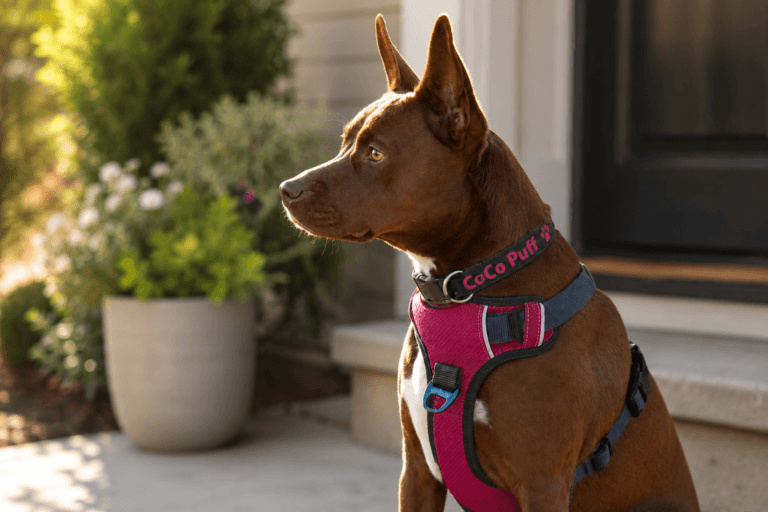
But a well-fitted no-pull style harness may help make pulling easier to manage while you practice calmer walking habits.
One option to consider is the Embark Adventure Dog Harness
Based on available product details, this harness includes front and back leash attachment points, adjustable straps, padding, reflective trim, and a handle. The front leash attachment may be helpful for some dogs because it can give you more gentle control while practicing loose leash walking.
This may be helpful if:
– Your dog pulls hard on a standard collar.
– You want a harness that spreads pressure across the body.
– You like having both front and back leash clip options.
– You walk early in the morning or later in the evening.
– You want a tool that may support training without making the harness the whole solution.
The AKC notes that harnesses can be a comfortable alternative for some dogs, and front-clip harnesses may help with dogs that tug.
Just remember: the harness is only one tool. The real progress comes from practice, patience, and consistency.
✨ Quick note: This post is part of an Amazon Creator Connections campaign and may contain Amazon affiliate links. As an Amazon Associate, I may earn from qualifying purchases at no extra cost to you. Thank you for supporting CozyNutter.com.
Keep Walks Short While You Practice
If your dog is a strong puller, long walks can become frustrating quickly.
Try shorter walks while you are building the habit.
You might do:
- 5 minutes of leash practice
- A short potty walk
- A calm sniff walk
- A little indoor training afterward
This can help your dog practice better behavior without getting too overstimulated.
Short and peaceful is better than long and stressful.
What Not to Do When Your Dog Pulls
When you are tired or embarrassed, it is easy to react quickly. I get it. Walks can feel like a lot when your dog is pulling hard.
But try to avoid:
- Yanking the leash
- Shouting
- Dragging your dog backward
- Letting your dog pull all the way to the reward
- Practicing near big distractions too soon
- Expecting one walk to solve everything
Your dog needs a clear pattern they can understand.
Pulling pauses the walk. Calm walking moves the walk forward.
That is the simple message.
When to Ask for Extra Help
Sometimes pulling is not just excitement.
You may want help from a qualified positive-reinforcement trainer, veterinary behaviorist, or veterinarian if your dog:
- Lunges at people, dogs, bikes, or cars
- Barks intensely on walks
- Seems fearful or panicked outside
- Pulls so hard you feel unsafe
- Redirects frustration toward you
- Coughs, limps, or struggles to breathe
- Seems uncomfortable in walking gear
Getting help does not mean you did anything wrong. It means you are paying attention and trying to keep walks safe.
Final Thoughts
If your dog keeps pulling on the leash, take a deep breath.
You do not have to fix everything today. Start with one tiny goal: reward loose leash moments and pause when the leash gets tight.
A no-pull harness like the Embark Adventure Dog Harness may help manage pulling while you practice calmer walking habits, but the heart of the progress is still the gentle routine you repeat.
One calm step. Then another.
That is how better walks begin.
Want to make your next walk feel a little calmer? Try practicing one simple rule today: pause when the leash gets tight, and reward your dog when the leash goes loose. If your current walking setup feels hard to manage, the Embark Adventure Dog Harness is one option to consider as a support tool while you practice.
FAQ
Can a harness stop my dog from pulling?
A harness cannot guarantee that your dog will stop pulling. A no-pull or front-clip harness may help manage pulling while you practice loose leash walking.
Why does my dog pull so much on walks?
Dogs often pull because they are excited, curious, or trying to reach something. If pulling gets them closer to what they want, they may repeat it.
Should I stop walking when my dog pulls?
Yes, calmly stopping can help teach your dog that pulling does not move the walk forward. Start walking again when the leash loosens.
How long does it take to teach loose leash walking?
It depends on your dog, distractions, and consistency. Short daily practice sessions can help build the habit over time.
When should I ask a trainer for help?
Ask for help if your dog lunges, barks intensely, seems fearful, pulls so hard you feel unsafe, or has signs of pain or breathing trouble.
References
American Kennel Club: AKC leash pulling tips. Helpful for loose leash walking tips and rewarding calm leash behavior.
American Kennel Club: AKC harness vs. collar guide. Helpful for explaining harnesses, collars, and front-clip options.
American Veterinary Medical Association: AVMA walking with your dog. Helpful for dog walking safety and collar or harness fit reminders.